Friday, 15 February 2013

Cart before horse

It has often been said that the role of CAMRA is “to campaign for real ale” and that seems a clear enough mission statement. However, something that isn’t appreciated as widely as it should be is that CAMRA actually predates “real ale” as a concept. It’s not as though the organisation was formed to defend something that was widely understood but felt to be under threat.

When they had their famous discussion in that pub in the west of Ireland, the four founder members had a general sense that something was going wrong with British beer, but they didn’t know exactly what. Initially, of course, the organisation was called the Campaign for the Revitalisation of Ale. It was only later, once they had looked into the subject more thoroughly, that the current definition of “real ale” was arrived at.

In the context of the British draught beer market at the time, it was actually a pretty good approximation of the distinction between “good” and “bad”, and it is something that has stood the test of time. Of course recently it has been challenged to some extent by the rise of “craft keg”, but that remains very much a niche phenomenon and this certainly isn’t meant as yet another blogpost on that much overdone topic.

The problem starts to arise when the principle is extended to areas of the beer market for which it was never intended. By the time CAMRA was founded, cask-conditioning had pretty much died out beyond the shores of Great Britain, but that isn’t to say there was no good draught beer in any other countries. Yet you would find some people who had taken the definition a bit too seriously saying things like “there’s no good beer in Germany, it’s all keg”, which was both silly and ignorant. To some extent, you still do.

Matters got worse, though, and were brought closer to home, when the principle was extended from draught to packaged beers in the UK. In 1971, bottled and canned beers accounted for less than 10% of the British beer market, and so had not assumed the significance they have now, and effectively all bottled beers had been “bright” for decades as drinkers wanted to avoid the risk of cloudy beer. There were only a tiny handful of bottle-conditioned beers still on the market, and so CAMRA could easily put these on a pedestal without ruffling too many feathers. The discerning drinker drank real ale in the pub.

However, over time the market changed. There was a steady move from pub to at-home drinking, and brewers began introducing bottled (but brewery-conditioned) versions of the popular real ales people enjoyed in the pub, rather than the generic pale and brown ales that had once dominated the market. Clearly a bottle of Taylor’s Landlord is a very different product from a can of Younger’s Tartan, and yet it was still glibly dismissed as “keg in a bottle”.

In response to this, CAMRA began putting more effort into championing bottle-conditioned beers, and developed the marketing concept of “real ale in a bottle”. White Shield has been repackaged and promoted, and some of the established brewers have introduced new beers like Fuller’s 1845 and Young’s Special London Ale. However, it can’t be said that the sector has exactly set the market alight, and most of the widely available BCAs are strong specials that you would only drink on occasion rather than everyday quaffing brews.

And the downside is that many micro-breweries have been encouraged to produce ranges of bottle-conditioned beers that, to be blunt, are wildly inconsistent dreck, and which many buyers will actively avoid. Those smaller breweries wanting to make a mark in the bottled market have – to the chagrin of some CAMRA diehards – gone for brewery-conditioning, as they know it is more customer-friendly. Take, for example, Purity, Slater’s, Moorhouse’s, Hawkshead, Harviestoun and Williams Bros, all of which have been spotted on the shelves of my local supermarkets.

It has to be recognised that bottle-conditioning simply does not give the drinker the clear distinction from brewery-conditioning that cask beer does over keg. Indeed, the main difference was always the care needed in pouring to keep the sediment in the bottle, and the likelihood of getting a cloudy glassful, although that has been eroded by the widespread adoption of “sticky” yeast by the bigger brewers. But, given that, it cannot be said that a bottle of bottle-conditioned Fuller’s Bengal Lancer presents the drinker with a significantly different experience in terms of general character and mouthfeel from one of brewery-conditioned ESB.

As py0, who sometimes comments on here, said on the CAMRA forum, you can take some CAMRA diehard into Tesco, show him the hundred or more widely varied British ales on the shelves, mostly from independent and micro breweries, and ask him which he thinks are worth drinking. He’ll cough, hum and hah a bit and point out the one or two that are bottle-conditioned such as 1845 or White Shield. Surely that can’t be an acceptable position for an organisation supposedly committed to promoting quality and variety in British beer and brewing.

Of course the vast majority of drinkers, even the most knowledgeable and discerning, cheerfully ignore this distinction, and its effect is not so much to restrict the prospects of individual breweries as to make CAMRA appear pedantic and out-of-touch. It does it no favours to erect bottle-conditioning as a shibboleth for packaged beers. Whether or not a beer is good should be judged by how it actually tastes, not on whether some particular hard-and-fast rule has been rigidly applied.

Monday, 11 February 2013

Premium position

Following the most recent round of brewery price increases, I paid £3.20 for a pint of Robinson’s Dizzy Blonde (3.8% ABV) in a pub within the boundaries of Stockport MBC. This compared with a previous price of £3.05, and so represented an increase of nearly 5% - and that’s before the next round of the duty escalator. There’s at least one pub I can think of within the borough boundaries where it would probably be at least 10p dearer, while on the other hand you could get the same beer, or the slightly stronger Unicorn, for £2.60, only a few miles away in and around the town centre.

On the face of it, such differentials may seem hard to justify when the underlying cost of the beer is identical. However, it must be remembered that these pubs are tenancies, not managed houses, and licensees are entitled to make their own judgment as to the appropriate level of pricing for their local area. Pub company owned pubs in the Stockport suburbs are already charging similar prices, and out in the leafier parts of Cheshire the typical price of a pint is well north of £3. Those with an interest in economics may also want to consider the concept of embedded rent, which is especially relevant to products such as pub drinks which are consumed at the time and place of purchase and not stored.

While it is undoubtedly true that differentials between pubs owned by the same brewery have widened over the years, it has always been the case that some pubs, often those serving a more prosperous clientele, have charged a price premium. And you can now see similar differentials in the Holts estate, once renowned for uniform low prices, between their “improved” pubs and their more traditional boozers.

A further factor is that customers of pubs in more salubrious areas will not only have more money in their pockets, but are also more likely to be diners and so will view the cost of their pint as part of their overall spend. A 50p differential on one or two pints will be neither here nor there if you’re spending £15 or more on a two-course meal, but if you’re going to the pub for a six-pint session you will be much more price-conscious.

The question must be asked, though, as to whether the trade as a whole is taking decisions which from the short-term perspective of the individual pub may seem to make sense, but in the long-term are likely to seriously erode business by continually raising prices above the general level of inflation, let alone their customers’ disposable income.

Saturday, 9 February 2013

Wet January

Well, not a lot of interest from blog readers in “Dry January”, with no less than 46% having visited pubs ten or more times just to have a drink, and two-thirds having done it at least five times. Amongst this sample, pubgoing is clearly alive and well. However, as seen with other polls on here, there’s a distinct U-shape to the results, with 28% having done it just once or twice or not at all - although they may well have had a drink elsewhere.

As I said in a recent post, people who want to go to pubs will continue to go to pubs. Whether the population as a whole will do the same is less certain.

Thursday, 7 February 2013

Sticky wickets

There’s an interesting new website called A Journey into History which contains reminiscences of the long-closed Railway Inn on Wellington Road South in Stockport, which is now an art shop.

One of the most memorable anecdotes is the tale of pub regular “Sticky” Edwards whom the family encountered when they moved to another pub, the Church in Heaton Norris. At the same time both funny and sad, this has to be read to be believed, and conjures up a vanished world of how pubs used to be.

You just don’t seem to see that kind of heroic-cum-tragic volume consumption of beer in pubs nowadays. Indeed, to maintain a twenty pints a day habit would be prohibitively expensive, yet “Sticky” seemed to manage it on a pension in the 1950s, suggesting that the real-terms price of a pint across the bar has actually increased over the years.

The story reminded me of this post from last year about a retired licensee who claimed to have routinely drunk forty pints a day in his heyday.

Sunday, 3 February 2013

A more selective appeal

Tandleman recently wrote a post about the future of the pub entitled I’ll Still Have a Pub to Go To. This included the following comments about the current situation that could almost have been written by myself:

So why go to the pub? Remaining bottom end pubs are no go areas, road house pubs have either gone or become family oriented eateries, estate pubs have closed, slowly, one after the other as drinkers can drink and smoke cheaply at home, town centre pubs can be hell holes at weekends (or magnets for a certain kind of young drinker) and deserted during the week. Good honest locals are struggling too. My observation too is that many young drinkers that do find their way to the boozer, aren't drinking that much by way of beer, but ready mixes, exotic ciders and gaudily coloured spirits with Red Bull.
His conclusion is that, while the pub trade has declined, there will always be pubs of some kind for those that want them. Despite all the doom and gloom, it is important to remember that we still have two-thirds of the pubs that were trading thirty years ago, and some of them at least continue to do very healthy business.

However, as I posted here, both the geographical and social range served by pubs have become narrower over the years. The famous quote from the classic film This is Spinal Tap that the band’s appeal was “becoming more selective” is very much true of pubs as well. Whole swathes of inner cities are now pretty much devoid of pubs – see this post on Pubs of Manchester about how a recent closure has left Collyhurst in Manchester “an almost pub-free district” – while the comfortable middle classes, although they may eat in gastropubs, don’t do much actual drinking in pubs any more.

It’s also the case that closing one pub doesn’t necessarily mean that all its customers will go to another. Making a visit to a pub depends on a particular combination of opportunity and geography, and for every pub that closes, there will be a proportion of its customers who simply stop going to pubs rather than moving to one down the road, and a segment of society for whom pubgoing ceases to be something that is an option in their normal routine.

Rather than having a universal appeal, pubs in future will need to specialise in those aspects of their offer that they can do well enough to tempt people out of their living rooms. This is why, in the right location, specialist beer pubs are doing much better than bog-standard pubs, but it doesn’t mean your average estate local will prosper by putting on a range of craft kegs. Pubgoing will increasingly become a niche market, not something most people do.

In a sense it is now Wetherspoon’s who are flying the flag for pubs used by a variety of age groups and for a range of different purposes, and which anyone can walk into without looking or feeling out of place.

Another factor is that, perhaps counter-intuitively, pubs seem to thrive in areas where there is already a lot of activity, rather than locations convenient to people’s homes. We can see clusters of pubs and bars, and new openings, in places like Chorlton and Didsbury, and to some extent in areas of Stockport like Heaton Moor and Cheadle Hulme, while many pubs set amidst housing estates have closed despite the number of potential customers living nearby. That is certainly what drives Wetherspoon’s location policy.

Yes, there will still be pubs and bars in twenty years’ time, but I expect there to be a lot fewer than there are today and, outside of major city centres and prosperous inner suburbs, just going to a pub to have a drink will be something that most people rarely contemplate doing and indeed perceive as a trifle eccentric.

Saturday, 2 February 2013

Edgeley-on-Thames

Great Night Out is a comedy-drama series currently showing on ITV1 at 9 pm on Friday nights, which focuses on the lives of four mid-thirties blokes purportedly living in Stockport. Much of the action seems to centre around copious consumption of pints of smooth bitter in the pub, although surely working-class men of that age would be much more likely to be drinking Carling.

Many of the exterior scenes were actually shot in Edgeley in Stockport, but the featured pub, the Admiral Lord Nelson, is actually the Queen’s Arms nearly 200 miles away in Battersea, London, which indeed as can be seen from the picture is a pub of very distinctly “London” appearance.

Some of the best TV moments of recent decades have come from comedy-drama series such as Auf Wiedersehen Pet, but unfortunately this one, while the concept is promising, is actually utterly dreadful, with cardboard characters and unlikely, contrived situations that just do not ring true on any level. Despite the interest of looking for familiar locations, I’ve now given up on it.

Probably the best pub-centred TV show I have ever seen was Early Doors, which had a couple of series on BBC2 in 2003 and 2004. This also had a strong Stockport flavour, with many local street names featuring. Although a sitcom, it was actually like a mildly exaggerated version of real pub life, which perhaps is why some critics found it rather slow-paced. One of the cast was Christine Bottomley who also features as Julie in Great Night Out.

Tuesday, 29 January 2013

Minimum support, maximum damage

I know others have got there first, but I thought these two stories about minimum alcohol pricing that came out in the past few days were worth a mention.

First was an opinion poll conducted by YouGov on behalf of SABMiller, which found that a mere 0.36% of people said that it would lead them to drink more in the pub and less at home, while no less than 39% said it would mean they actually drank less in the pub. That completely undermines the argument advanced by some in CAMRA and industry twerps like Rooney Anand of Greene King that it would actually help pubs. In fact it would do just the opposite.

The pernicious effects of the policy are underlined by the fact that 16% of respondents said it would lead to them cutting back on other areas of spending, and 13% of those already in financial difficulties said they would cut back on food. A better way of making the poor poorer is hard to imagine.

Second, another poll conducted by ComRes on behalf of the WSTA found that fewer than one in five people support the plan. No less than 87% thought it would do nothing to reduce binge-drinking. You do have to wonder why the government are pressing on with such a blatantly unpopular and ineffective policy, although the word is that they are looking for a way to quietly shelve it before the European courts do it for them.

Yes, of course both SABMiller and the WSTA have an axe to grind, but YouGov and ComRes are reputable polling organisations and they certainly would not conduct such polls using dubious methodology.

Saturday, 26 January 2013

Take me home country roads

Councillors in County Kerry in the west of Ireland have voted in favour of asking the Irish government to introduce a relaxation of the drink-drive limit for rural areas. Ireland reduced its limit from 80mg to 50mg in 2011 and, not surprisingly, the move has led to a sharp fall in trade for rural pubs, already reeling from the impact of the smoking ban. The petition has minimal chance of success, but it underlines how cutting the limit has cast a grey blanket of Puritanism over social life outside major towns and cities, just as it would on this side of the Irish Sea. For the most part, Ireland is a far-flung, rural country, and the available trade for such rural pubs as remain must now be very thin pickings.

The cut is defended as a road safety measure, but in reality the vast majority of drink-related casualties have always been caused by people well over the previous limit, and the additional risk for drivers in the 50-80 mg band varies between zero and very little. The people who cheerfully ignored the previous law will continue to do so, while the law-abiding will sit miserably at home over a few cans of Guinness or a bottle of whiskey, missing the companionship of the pub. Many will have been happy to enjoy a couple of legal pints with their friends, but if restricted to just the one will conclude the trip is no longer worthwhile.

The proposal isn’t entirely far-fetched, as there is a precedent for having different limits in different areas within the same country – until fairly recently, this applied between different states of the USA, and of course it will be the case if and when Alex Salmond cuts the limit in Scotland.

Friday, 25 January 2013

Decline accelerates

Three months ago I wrote a post called Steady Decline Continues, saying that the most recent BBPA Beer Barometer figures weren’t actually all that bad, considering. However, following a sharp downturn in the final quarter of 2012, the latest ones, released today, are markedly worse.

On an annualised basis, the overall beer market is down by 4.7% on 2011, with the pain shared equally between on- and off-trades. The on-trade is now 25% down on five years ago, and an annual 4.7% fall will halve the total in 14 years. Indeed, the past 14 years have seen a 45% drop. It’s no longer a switch from one to the other, it’s a decline right across the board, so the argument that “supermarkets are killing pubs” looks very threadbare.

The beer duty escalator must bear a substantial share of the blame for this. I certainly get the impression there has been a significant fattening of margins on undiscounted products in the off-trade, with a humble four-pack of Carling now often costing well north of £4, and the £3+ pint of cooking bitter has become commonplace in pubs. On the other hand, the anti-drink lobby will look at the figures and say “good result – keep with it”.

Sunday, 20 January 2013

Bière ordinaire

Robinson’s Unicorn (formerly Best Bitter), the best-selling cask ale in and around Stockport, is brewed to a relatively generous 4.2% ABV. It’s fairly rare for a beer of that strength to be sold as the staple bitter in pubs, and I’ve heard people complaining that “it gives them a bad head”, probably because it’s that little bit stronger than most of its competitors.

It’s sometimes claimed by anti-drink campaigners that drinkers will simply “go for strength”, but in fact that is very wide of the mark. Beer has a much wider range of strengths than wines or spirits, but in reality beers of a particular type tend to cluster within a fairly narrow strength range, and people rarely choose one over another just because it is that bit stronger.

“Ordinary bitter” took over from mild as the best-selling beer in Britain in the early 60s and, although it has now relinquished that position to cooking lager, it remains by far the best-selling type of ale. Despite the rise of golden ales and premium beers, I would guess it still accounts for well over half of all real ale sold, and a much higher proportion of keg beers.

Typically it falls in a strength range between 3.4% and 4.0%, and within that I don’t really think drinkers are too concerned about the actual strength. Indeed, one of the best-regarded examples, Brakspear Bitter, is down at 3.4%. Intoxication is not the main object of drinking ordinary bitter. It’s a beer suited to long evening sessions in the pub, where the effect builds up gradually and it acts as a social lubricant. It doesn’t instantly render you incapable; a couple at lunchtime won’t stop you working in the afternoon, or cause you to fall foul of the breathalyser. It’s a subtle, social kind of beer. Up to a point, as with the example of Unicorn, moderation in strength is even seen as a virtue. Arguably, it is the quintessential English beer.

This helps explain why the reduction in strength of John Smith’s Extra Smooth won’t be met with outrage and boycotts, just as the reduction of Stella wasn’t. As long as a beer continues to fit within its category, drinkers, especially pub drinkers, won’t be too bothered.

Out of interest, here are the strengths of the some of the popular ordinary bitters in the North-West, compared with their original gravities from the 1977 Good Beer Guide:

  • Holt’s Bitter: 4.0% (1038.5)

  • Hyde’s Bitter 3.8% (1036)

  • Lees Bitter: 4.0% (1038)

  • Robinson’s Unicorn/Best Bitter: 4.2% (1042)

  • Sam Smith’s Old Brewery Bitter: 4.0% (1039.9)

  • Tetley Cask Bitter: 3.7% (1035.5)

  • Thwaites Bitter: 3.6% (1036)
So we weren’t drinking particularly strong beers back in 1977 either, and nobody would have been outraged at being offered a 3.6% bitter.

Boddingtons Bitter – now no longer available in cask – was declared at 1035 in 1977. The brand owners made a big mistake when they increased its strength to 4.1% a few years before its demise – indeed Brunning & Price replaced it with Thwaites because their regular customers (no doubt including many drivers) felt it had become too strong.

Wednesday, 16 January 2013

Water, water everywhere

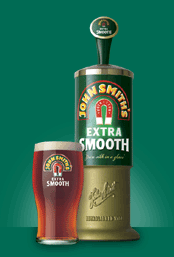
The latest round in the inexorable process of watering the workers’ beer came with the announcement from Heineken that the strength of John Smith’s Extra Smooth was to be cut from 3.8% to 3.6% ABV. This was greeted with hoots of derision from many quarters, but it should be remembered that this beer, however little you may think of it, is the best-selling draught ale in the UK. To be honest, I can’t recall ever having drunk it, although I have had Tetley’s Smooth a few times.

Heineken have managed to save themselves £6.6 million a year in beer duty while at the same time gaining brownie points by going with the flow of the government-approved programme of taking alcohol units out of the market. It still isn’t out of line with its competitors – Greene King IPA is 3.6%, and I believe smoothflow Boddingtons is only 3.5% – but this is a clear indication of the overall direction of travel. And don’t forget that some popular Scottish smooth beers such as Belhaven Best and Caledonia Best are a mere 3.2%, so there may well be further to go. In the long term, beer strength reductions are an inevitable result of the duty escalator.

Cask John Smith’s Bitter will remain at 3.8%, so there may be a temptation to say “I’m all right Jack.” However, we have already seen strength reductions for many popular cask brands such as Bombardier and Old Speckled Hen and, while there remains a wide mix of strengths in the market, I certainly get the impression that the average strength of guest beers offered in pubs has significantly fallen in recent years. And it’s not inconceivable that, for example, Robinson’s might decide that they gain no benefit from brewing Unicorn at 4.2%, which is a couple of points stronger than any of its direct competitors.

Of course, given that in some quarters it is portrayed as a virtue that beer is a “low-strength drink”, this could be regarded as good news in advancing the responsible drinking agenda.

Saturday, 12 January 2013

Obscure beer syndrome

Something I’ve noticed a few times recently is pubs aiming to establish their credentials for selling and promoting real ale trying a bit too hard by offering an ever-changing roster of often distinctly obscure and seasonal guest beers. These are not the specialist multi-beer alehouses, but pubs of a more general appeal, with food trade and footy-watching regulars, that want to make a mark for themselves.

There’s nothing wrong with rotating guest beers, but you can have too much of a good thing. In the widely-mentioned Peter Jackson article about CAMRA’s image with the young, he says that the reported factors putting people off drinking it include “too much variety” and “confronted with unfamiliar brands, which makes the decision difficult”.

I’m probably vastly more knowledgeable about the beer market than most punters, but even so I recently went in a pub where I was confronted with four totally unfamiliar beers and struggled to establish which I’d actually want to drink. I’m not suggesting an unremitting diet of familiar brands, but surely it would make sense, especially in a pub with a lot of casual customers, to have at least one beer on the bar such as, say, Brains SA, Black Sheep Bitter or Draught Bass that they might at least recognise. In a pub with a stronger regular trade, perhaps you should have one or two regular beers from a well-respected local micro on the bar alongside the more unusual brews. A well-chosen permanent beer can be a pivot around which the guest beers revolve.

It shouldn’t be forgotten that, even now, most real ale is probably consumed by drinkers as their “regular brew” in just the same way as Carling, Guinness and Strongbow. It certainly is round here in the average Robinson’s, Holts and Sam Smith’s pub.

Another problem is that this approach can easily lead to a lack of balance in their beer range, and four rather samey beers occupying the pumps. Ideally, if you have four pumps, it would make sense to offer a choice of a dark mild or stout, an ordinary bitter, a stronger special bitter and a golden ale. Christmas brings a slew of seasonal specials which are typically not too dark, not too strong and not too hoppy, and four of those can be distinctly underwhelming.

Down in the trenches

Some telling words here from William Lees-Jones of Middleton family brewer J W Lees:

Lees-Jones said that the company had been “in the trenches” since the smoking ban. He said the firm had initially adopted a “very defensive” approach, protecting its core wet-led trade by building smoking shelters.

“It has been a waste of time, if I’m honest. That part of our trade changed forever.”

“Where we have seen success, it has been with food and families”.

Food sales throughout its 30-strong managed-pub estate have increased from about 15% to 43% since the smoking ban was brought in”.

Surely, looking at it the other way, that means wet sales have declined from 85% to 57%, not good news if you run a brewery. This is yet more evidence of how the smoking ban has killed the traditional drink and chat community pub.

Lees may succeed in opening a few trendy café-bars, but how does a café-bar benefit from being owned by a family brewer dating back 185 years? As I reported here, the future of the pub is seen as “food, families, females and fortysomethings”. No fags, though, at least those sold in packs of twenty. Which, for all too many long-standing pub customers, spells “f-off home”.

And a smoking shelter, however commodious and well-intentioned, can never be more than a grudging, third-rate substitute for actually allowing the smokers inside the pub itself.

Saturday, 5 January 2013

Out of their boxes

Tom Paine recently made a blogpost in which he suggested that resistance to State nannying is only likely to become serious once the pleasures of the working class are directly targeted:

The state can beat up as many anti-statist intellectuals as it likes and no-one will protest. Let it beat up the smokers, drinkers and pie-fans however and popular resistance can be expected - even from those usually too idle to move further than to the nearest Greggs. Doctors with God complexes may therefore be our best hope. Perhaps as we enter the final phase of end-of-year excess, we should be campaigning for votes to be proportionate to BMI, units of alcohol per week or fags per day?
I’m not too sure about that, as we seem to have meekly accepted all kinds of intrusion into private behaviour in recent years. But the BMA seem determined to prove him right, with their latest call for official government alcohol guidelines to be revised downwards. Apparently we should cut our consumption to no more than a quarter of a pint of beer a day. That’s really going to keep loads of pubs in business.

Mind you, if this becomes official, the convenient figleaf used by CAMRA and others that “moderate drinking is compatible with a healthy lifestyle” will be torn away. If you accept the BMA’s definition of a healthy lifestyle, it won’t be. To my mind, the day CAMRA abandon any pretence of standing up for “responsible drinking”, as officially defined, will be the day they are set free.

Of course, all this stems from a ludicrous misinterpretation of the concept of risk. Pretty much everything you do involves some risk, and drinking a bit more (or even quite a lot more) than some made-up official “guidelines” actually doesn’t involve significantly more risk. And it’s funny how they keep quiet about participation in sports and promiscuous sex.

Saturday, 29 December 2012

Halcyon days in Poynton?

I wrote here about how Wetherspoon’s had bought the former Kings Bar and Lounge in Poynton and were busy working on it with a view to opening on Tuesday 18 December, reverting to the pub’s original name of the Kingfisher. Well, that deadline was achieved, so I popped in to have a look.

It originally opened as a Greenall’s pub in 1959, and has the typical sprawling, low-built style of estate pubs of that era. There’s a plaque inside the door with some information about the pub’s history. Untypically for the Wetherspoon’s estate, it has a small car park, maybe with about 20 spaces, which was completely full shortly after noon.

I never visited it in its previous incarnation, so I don’t know if the layout has changed at all, but it’s largely open-plan, with a long bar counter down the right-hand side, a raised seating area to the left, and an odd windowless area with a skylight full of chairs and tables right in the middle. The toilets, in typical Wetherspoon fashion, are upstairs, which I doubt was an original feature.

The food and drink are the standard Wetherspoon offer, with ten handpumps on the bar and guest beers of up to 6.0% priced at £2.09. Interestingly, in view of my previous posting, amongst the beers on the bar was Harviestoun Schiehallion craft lager on keg. Some, but not all, of the food prices were a little higher than Stockport and Didsbury.

The interior design is unashamedly modernistic, and to my eye more resembles a modern upmarket McDonalds than a traditional pub. The colour scheme is predominantly pastel, the floors are bare wood or lino with geometric patterns, and many of the chairs are tubular steel rather than wood. The only bench seating is one stretch right at the far end, and there’s no shortage of high-level posing tables. It was also, on this particular visit, heated to an uncomfortable level, with a fierce downdraught of hot air right in front of the bar counter.

There’s an extensive discussion on the Poynton web forum here, and some photos here which give a reasonable impression of the interior. Like all Spoons, it does what it says on the can, and no doubt they have researched the potential marketplace thoroughly and it will prove a success. However, as a place to have a drink or a meal, I didn’t personally find it remotely congenial. Other Spoons, such as the Gateway, have a much more “pubby” feel to them.