Monday, 24 September 2012

Cornish contretemps

Snowolf reports some rum goings on about Good Beer Guide selections in Falmouth. Not a place I know well, but reading between the lines I suspect the establishment in question is the Oddfellows Arms, of which the 2012 edition says “Reached via steep steps, this small, unpretentious and basic pub is a real community-focused local, although visitors are quickly made welcome.”

Let the cold winds blow

Last Saturday was a beautiful, sunny day, but it was definitely Autumnal, with a distinct nip in the air. So I go in a pub, one that has recently been refurbished and I wanted to check out, and find that they have wedged open both doors to the main lounge, resulting in a draught of freezing air. How many times have I seen this done by staff who are working up a sweat behind the bar and have no idea how their customers feel? Yes, I could have suggested they close the doors, but if you’re only there for a swift one there’s little point. Pubs in general are far too keen both to turn up the heating and to leave the doors open.

Saturday, 22 September 2012

Baby and bathwater

In a recent discussion on another blog, the question came up as to whether the 1989 Beer Orders were actually the high water mark of CAMRA’s campaigning activities *. For better or worse, they certainly ended up transforming the British brewing and pub landscape, so I thought I would run a poll asking whether people thought they had had a positive or negative impact.

There wasn’t a huge turnout, and opinions seemed to be broadly split three ways, although nobody thought their effect had been “very good” and 72% thought that, overall, the effect had been negative.

Since 1989, we have seen dramatic changes in the industry, most notably

  • The large-scale severance of the traditional link between brewing and pub-owning
  • The transfer of British brewing to foreign-owned multinational companies
  • The creation of giant pub companies which seemed more driven by considerations of property than retailing
I would suggest that, to some extent, these trends were happening anyway, and even without the Beer Orders the situation today wouldn’t be vastly different from what it actually is. But without them we probably would not have seen the rise of the debt-financed pub companies which are widely seen as having had a negative influence on the British pub trade.

Unless there is an overwhelming monopoly, government intervention in markets always tends to be a bad idea, and the Beer Orders rather prove the point that it is fraught with unintended consequences.

It also seems to me that the government of the day embarked on the Beer Orders without any clear view of what the consequences actually would be. Did they think that the Big Six companies would simply sell off their surplus pubs, or even that they would spin off regional breweries with an associated estate of tied pubs as independent businesses? Did they ask them what they would be likely to do?

* I would argue that Progressive Beer Duty is actually the most significant measure CAMRA has ever managed to turn into legislation

Friday, 21 September 2012

Watering the ale

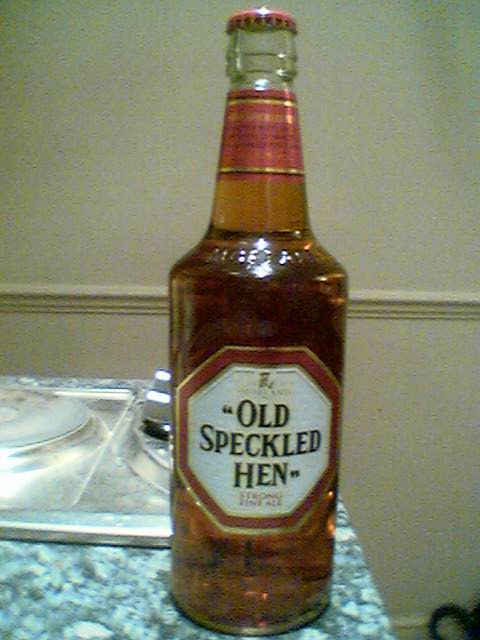
In the past few years, I’ve highlighted a number of examples of the strength of existing cask beers being cut, such as Old Speckled Hen, Brain’s SA Gold, Bombardier and Bateman’s XXXB. It’s easy to jump to the conclusion that this is linked to the “responsibility deal” under which the drinks industry has vowed to remove 10 zillion units of alcohol from the market by 2015, but in reality I would say it has much more to do with the changing nature of the beer market. As I said here, beers increasingly have to compete on the bar with others from different brewers, and any that is perceived as being out of step with the herd by being stronger than the norm (or indeed weaker) is going to lose sales.

It’s very different from the heady early days of the real ale revolution where the standard bearers were heavy, malty 1050 brews such as Ruddles County and Royal Oak. About the only remaining widely available free trade cask beer I can think of that is 5% ABV or above is Abbot Ale, and I wouldn’t rule out a future cut for that.

However, it’s not hard to imagine the spotlight of the responsibility deal being turned next on the premium bottled ale sector. While there are no mainstream premium lagers left above 5%, and many have been cut to 4.8%, there are plenty of PBAs in that category, many of which are considerably stronger than the corresponding draught beers. The market leader, Old Speckled Hen, is 5.2%, as is Thwaites Double Century, while Shepherd Neame Bishop’s Finger is 5.4%. And nobody can tell me the buyers of Bateman’s Victory Ale at 6%, or McEwan’s Champion at 7.3%, don’t have at least half an eye on “bangs per buck”.

Given the volumes sold, cutting the strength of bottled and canned Old Speckled Hen to 4.8% would make a big contribution to the “voluntary target”, and then others would be likely to follow. In the current climate, the slightest suspicion of using relative strength as a marketing tool earns a very black mark.

And here’s another speculation – might it be that in the future, declaring the alcoholic strength of drinks, far from being encouraged, will in fact be prohibited, to make it easier to get away with the progressive reduction in strength? All you will be entitled to know is the “strength category” of the beer. There is a precedent for this, too, as some years ago, stating the tar content of cigarettes was banned as, far from encouraging people to choose lower-tar brands, it was felt that it led smokers to regard those with less tar is in some way safer and thus they ended up inhaling more. Can’t be giving those proles the facts and letting them decide for themselves, can we?

Monday, 17 September 2012

Usual suspects

The Beer Orders and the subsequent massive sell-off of pubs were supposed to open the way for unprecedented choice in the beer market. To some extent this has happened but, as many warned at the time, opening up the market would tend to lead in the majority of pubs, not to more choice, but to a handful of popular beers squeezing others out. And, all too often, this is now the case. If you venture outside specialist beer pubs, you are likely to find the same limited range of beers dominating – currently beers such as Cumberland Ale, Old Speckled Hen, Wainwright, London Pride, Landlord, Doom Bar and Bombardier. None bad beers as such, but it’s depressing when you find three out of those on the bar of every non-tied pub you go into. It’s also the case that pretty much all of these are within the same strength range of 4.0%-4.5%.

On the other hand, in an independent brewer’s tied house, you may well find a more balanced selection with a wider range of strengths. For example, a Wadworth’s tied pub (The St James’ Tavern in Winchester) offered the 3.5% Henry’s IPA, the 4.3% 6X, and the 5.5% Bishop’s Tipple. Compare that with the typical “free” or pubco outlet where all beers will be within a couple of points of 4.2%.

Which, realistically, is better? And, as I’ve always said, choice should be found between pubs, not the same choice within every single pub.

The effect is even more marked in the keg sector. When, in England or Wales, did you last see any standard lager beyond Carling, Carlsberg and Foster’s outside a brewery tied pub?

Sunday, 16 September 2012

Windfall on the way

The Sunday Telegraph reports that supermarkets will be handed a profits windfall worth as much as £2.2bn if Government plans to impose a minimum alcohol price succeed. Well, I really never saw that coming.

Here’s a scenario, although I wouldn’t go to the extent of calling it a prediction. Plans for minimum pricing are struck down by the European courts, and so in 2013 Osborne goes for a massive one-off duty rise to in effect replicate the plan via the duty system. Just imagine the spluttering in CAMRA beards – be careful what you wish for, guys... Given the legal risk, I do wonder whether the whole thing is a smokescreen for punitive duty rises.

And here’s an excellent blogpost by Snowolf on the dangers of minimum pricing. As he correctly points out, the higher the minimum price is set, the more people who will be prepared to consider buying from illegal suppliers. You may well not think it will affect your 4 for £6 bottles of premium bottled ales, but it certainly would if it went above 60p per unit. And. if you’re used to buying 12 cans of Carling for £8, as much of the drinking population are, if it went above £12 you would be seriously thinking about it. The higher the minimum price goes, the more its effects mirror those of outright Prohibition.

Oh, and sign the petition against minimum alcohol pricing.

Drawn from the wood

Here’s an interesting discovery I came across recently on a long-defunct pub called the Wheatsheaf in the Winchester suburb of St Cross. Along the side is a panel saying ALE & STOUT DRAWN FROM THE WOOD. The fact that it appears to be tiled, and refers to stout, suggests that it very much predates the CAMRA era. Does anyone have any idea which brewing company may have originally been responsible for putting it up?

Saturday, 15 September 2012

Ploughbaby and ploughmoron

At its best, the ploughman’s lunch, a combination of quality crusty bread, traditional British cheese and tasty pickles, is perhaps the crowning glory of pub food – simple, informal, straightforward, authentic and bursting with flavour and character. But, unfortunately, far too often (indeed probably most of the time) it is bastardised out of recognition, as I was complaining back in 1993.

The typical ways in which it falls short of the ideal include:

  • Excessive quantity of salad – OK, have a few lettuce leaves and cucumber slices for appearance’s sake, but don’t let them dominate
  • Introduction of extraneous elements such as ham, pork pies and apples
  • Getting the proportions of the basic ingredients wrong
  • Poor ingredients – supermarket bread and sweaty Value Cheddar
  • Simple lack of quantity
During the past week I have been on my travels and unfortunately have encountered two of the most lamentable examples I can remember.

The first was in the Old Vine, a smart Good Beer Guide listed pub-cum-restaurant facing the green in front of Winchester Cathedral. I suppose in a pub charging £3.50 for a pint and £13+ for main course meals, you perhaps shouldn’t expect too much quantity from a £5.95 “Traditional Ploughman’s”. But it was utterly pathetic – two rounds of sliced white bread cut into triangles, two thin slices of (admittedly good) cheese than can’t have come to even two ounces, a small bowl of chutney and a bit of salad. If the whole lot had been assembled as a cheese and pickle sandwich you would still have felt badly done to. A pub with obvious upmarket aspirations can surely do better, both in quantity and, with the bread, quality.

But it gets even worse. A few days later, in Tewkesbury, a famously picturesque market town at the northern tip of Gloucestershire, with a wealth of half-timbered buildings. One of those is the Berkeley Arms (pictured), a Wadworth’s pub that I have visited a number of times over the years. Ploughman’s Lunch, £4.95. I check whether it includes ham – apparently it does, so I ask for just cheese. I wait, and wait, and wait. A woman sitting nearby is served a cottage pie, which she sends back because it is lukewarm, which is hardly a good sign. I ask where my food is, and am assured it is on its way. Eventually, after a good half an hour, it arrives. Large slice of pork pie, no cheese whatsoever. “I asked for cheese”, I say. “I thought you said no cheese”. So it goes back, and five minutes later arrives with a few roughly-cut slices of low-quality Cheddar. But no bread. “Where’s the bread?” “You want bread?” – as if the very idea of asking for bread with a ploughman’s is bizarre. Two or three minutes later, that arrives, three pre-buttered slices of supermarket white. There are pickled onions, but no chutney or Branston. I eat some of it, but by this time am so annoyed and fed up I end up leaving about half.

Having said that, my pint of Henry’s IPA was fine. Apparently the pub is struggling because of the competition from the Wetherspoon’s over the road, but even so that is no excuse for a combination of poor food and dilatory service. What a shame to see a pub of which I have fond memories fallen so low. That was one of my worst experiences in some time in a pub I have actually chosen to visit (as opposed to on an organised pub crawl). You will never beat Spoons on price – so you have to compete on quality, character and service instead.

I’m normally a bit reluctant to name names, but in both cases these pubs richly deserve it.

I remember one occasion (although I’m not sure exactly where) when I got a ploughman’s consisting solely of crusty bread, cheese, pickles and butter, all in generous quantities. Nothing else whatsoever. Which, to my mind, is just as it should be.

As an antidote to the above, I did find good lunchtime snacks (not Ploughman’s) in the Eclipse Inn in Winchester and the unashamedly upmarket Three Cups in Stockbridge. The Eclipse, a tiny pub near the Old Vine, with a mediaeval half-timbered frontage and a 1930s-style interior with bench seating, I thought was a cracking little boozer.

Bollocks at the bar

Pubs are well known to be frequented by people keen to impart all kinds of highly questionable information as gospel truth, and one of their favourite subjects is that of pubs and beer themselves. More than once, I’ve been assured by some dodgy character at the bar that he was one of the four founding fathers of CAMRA, even though I was damn sure he really wasn’t.

I was recently in a pub in Winchester and noticed that the metal section of a set of handpumps revealed when the handle was pulled bore the name of Marston’s. So, in the way of conversation, I pointed this out and asked whether the pub had once belonged to them. Oh yes, I was told, and Marston’s had continued brewing in the city until maybe around 1990. Indeed, the guy at the bar had clear recollections of the brewery in operation.

Now, I thought this was very doubtful, but without having the facts to hand didn’t want to kick off a debate. In fact, when I looked it up in that estimable book Where Have All the Breweries Gone?, I found that Marston’s had taken over the Winchester Brewery Company, with its 108 pubs, as early as 1923, and closed the brewery down in 1927, although the site continued as a bottling plant until 1969. So, as I suspected, he was talking utter bollocks.

Of course, even if you’re sure of your ground, it’s generally best just to nod sagely and exit the conversation rather than trying to argue the toss.

Interestingly, Marston’s, when they were still an independent company, sold off their pubs in the Winchester area to Greene King in 1999 as they felt they were outside their core trading area. I suspect that is a decision that the new, quasi-national merged company bearing their name (although in reality the successor to Wolverhampton & Dudley) now have cause to regret.

Friday, 14 September 2012

I’ve just Weed myself

A new drink that has been heavily promoted is “Jeremiah Weed Sour Mash Brew”. Seeing it on a generous discount at Tesco, I thought I would try one. It comes in an old-fashioned style 500ml bottle hinting at the design language of Jack Daniels and Jim Beam. While it looks like beer (albeit the head rapidly disappears), in fact it is really an alcopop, described on the bottle as “brewed with fruit alcohol, spirit and flavourings”. Essentially, it is a “root beer” with alcohol added. It doesn’t really owe anything to brewing as normally understood. There’s also a ginger-flavoured variety.

It has a subdued version of the herby, medicinal taste of Dr Pepper, although rather swamped by an overpowering sweetness. At 4% ABV, very little alcohol character comes through. It’s not actively unpleasant, but if I want a soft drink I’d prefer a Coke, and if I want an alcoholic drink I’d prefer a proper beer. I suspect it is just another fad that will quickly disappear from the market.

Apparently you’re supposed to drink it from a jam jar – the height of sophistication!

Saturday, 8 September 2012

Football crazy

As regular readers will know, I’m not the world’s greatest football fan*, but I happened to be reading this article and was struck by a reference to the autobiography of Roy McDonough, the most sent-off man in British football history:
My favourite line? Probably when he asks his physio at Southend whether drinking 70 pints of Stella every week is suitable behaviour for a professional athlete...
Interestingly, Roy McDonough would have been in the same year as me at school.

* it has its place, but it shouldn’t be allowed to take over entire pubs.

New beer in old bottles

Robinson’s brewery in Stockport have recently been reviewing their tied estate and selling off a number of pubs that they don’t see as viable in the long term. To their credit, they don’t seem to have imposed restrictive covenants on these, and a number are now reopening as free houses.

The latest issue of the local CAMRA magazine Opening Times reports that the formerly run-down and seedy Railway in Romiley has reopened as “Platform 1”, saying that:

The new-look pub is far removed from its previous incarnation, comfortably furnished in a stylish ‘modern traditional’ look and with a major food operation... On the beer front it’s good news across the board. Six cask beers are sold, with house regular ‘Platform 1 Cask Ale’ alongside five guest beers – two from micro brewers and the others from regional or national concerns.
The former Flying Dutchman on Higher Hillgate in Stockport (pictured) is to reopen as “The Fairway”, while the Board in Whaley Bridge is to become “The Drum and Monkey”.

I have asked the question in the past as to what extent how well pubs are run affects the overall demand in the market – a post that surprisingly got no responses. My conclusion was “not very much” but, on the other hand, within a specific area a pub that is run significantly better and/or differently can shift a lot of trade from its competitors. It’s also the case that in places like Romiley and Whaley Bridge (although less so on Hillgate) there is something of a closed micro-market, where relatively little trade comes in from outside, and many local pubgoers are in effect only going to choose between the six or eight pubs in their own village-cum-town.

I wish all of these new ventures well, but only time will tell whether they can attract new customers and achieve a level of success that they didn’t enjoy under Robinson’s ownership, or whether their previous failure was basically due to a combination of location and customer base that no new formula can do much to change.

It’s notoriously difficult to put your finger on what makes a pub work in terms of the combination of location, offer and value for money. If it was simply a case of tarting the place up a bit, putting a few different cask beers on the bar and watching the customers flood in, everybody would be doing it, but clearly they’re not. For example, nobody has yet bitten at the Grapes in Edgeley despite it being in a very densely-populated area.

Friday, 7 September 2012

Creative destruction

A point I have made more than once on here is that large sections of the pub trade seem to be intent on slowly but surely pricing themselves out of business, something that is echoed in this piece in The Independent by James Moore. While the finger of blame is often pointed at low supermarket alcohol prices, in reality it is the on-trade that has got progressively dearer, not the off-trade that has got cheaper.

To some extent this is inevitable because, as living standards rise over time, the price of services with a substantial labour content will rise more quickly than that of goods. But there seems to be a lazy acquiescence in this process, that each year prices over the bar will go up a bit more than inflation, and if we lose a few cost-conscious customers, so what, as we want to attract high spenders. Many pubs seem to have simply given up on any attempt to compete on price on any drinks.

Over time, though, the pub trade as a whole has shot itself in the foot with this approach. I once made this point on the Morning Advertiser website, which drew howls of complaint from licensees who said “with my current cost structure, there is no way I could significantly cut prices”. Which may be true, but perhaps that whole model of running tenanted or leased pubs is ultimately doomed. No business has a right to survival if it can’t compete.

The £3 plus pint may not be too much of a problem for the upmarket dining pub where most customers will only have one or two drinks and factor it into the price of their meal alongside the £17.95 braised lamb shank, or the hipster-infested craft beer bar, but in a wet-led boozer it becomes a serious deterrent.

Wetherspoon’s, of course, have seen this gap in the market and enthusiastically exploited it. A Spoons will rarely be the most characterful pub in its location, but the odds are it will be the busiest. Sam Smith’s pubs still seem to do well out of offering conspicuously low prices, without coming across as seedy or grotty, and so do many of the more traditional Holt’s houses.

Maybe someone needs to come up with a “value proposition”, including food, but not dominated by it, that will work for smaller sites than Wetherspoons, and for locations with less footfall, and which doesn’t come across as too downmarket that it deters “respectable” customers. But the days of the traditional, unbranded, all-purpose pub on the inner-urban, suburban or small-town High Street, charging 80p a pint more than Spoons, are surely numbered. The pub market is changing, and the old ways won’t necessarily work any more.

Thursday, 6 September 2012

Scotland the grey

Well, as expected, the Scottish government have launched their consultation on reducing the drink-drive limit north of the Border. Much has been written on this before, but surely if there is a problem with drivers exceeding the current limit, then that needs to be enforced and publicised more effectively. And is there really any firm evidence of disproportionate accident involvement amongst drivers in the 50-80 mg range? What it looks very much like is identifying a problem with drivers doing 70 in a 40 limit, and reducing the limit to 30, thus inconveniencing anyone who wants to stick to the law, but then doing nothing more to actually enforce it.

As I have said before, far from being a road safety measure, the main factors behind this are to advance the Scottish government’s general anti-drink agenda and to drive a further wedge between Scotland and England. Even if they never touch a drop immediately before driving, it will force law-abiding people with driving licences to think much more carefully about when they can ever reasonably have more than a single alcoholic drink.

I also commented on the blatant injustice of banning English drivers from driving in England for doing something in Scotland that remains legal south of the Border - something that the Home Office have confirmed will be the case. And will it be reasonable to impose huge insurance penalties on English drivers for doing something where, if the police found them doing it in England, they would just wave them on their way and there would be no obligation to even mention it to the insurance company?

Sunday, 2 September 2012

Were they ever any good?

I am fortunate to have as my local pub the Nursery Inn in Heaton Norris, Stockport, a previous winner of CAMRA’s national Pub of the Year Award. It’s a pub built in 1939 to replace an earlier one just down the road, and has the typical elegant but restrained styling cues of that era. It’s a substantial pub, but small enough to retain some intimacy of scale, and it still works pretty well and continues to do good business.

However, it is very noticeable from my blog of Closed Pubs how many of the pubs that have closed have been magnificent edifices of the inter-wars period, often in the “Brewer’s Tudor” style, almost resembling licensed stately homes, that have fallen into decay, dereliction and eventually demolition.

Despite their impressive architecture, was it maybe the case that many of these pubs were always too big and too impersonal, and never really developed that sense of community, intimacy and feeling at home that are so vital for success? Shortly after I moved into this area, I remember going in to the Gateway in East Didsbury (now a Wetherspoon’s) at a quiet time and being struck by what an unappealing, soulless place it was. Having said that, by the time I came to use them, most of these pubs had been gutted to a greater or lesser extent and so had lost much of their original character.

I’ve never been there, but one of the most magnificent survivals of this era of pub building must be the Berkeley in Scunthorpe, now owned by Sam Smith’s and featuring on CAMRA’s National Inventory of Pub Interiors. There are very few in the country that are anywhere near as intact.